WHOLESALE BUYING GUIDE · CROP PROTECTION
Buying insect netting in bulk requires more than choosing a mesh number. Importers, agricultural distributors and commercial growers need a specification that connects pest exclusion, airflow, roll dimensions and receiving inspection. A clear request for quotation helps you compare the same product grade and avoid ordering rolls that do not fit the project.
This guide follows a practical purchasing sequence: define the application, confirm measurable specifications, approve a sample and agree the packing and delivery terms. ZHINONG CLOUD supplies agricultural materials from China and can discuss insect net options against your crop, site and order requirements.
Request an Insect Netting Quote on WhatsApp · View insect net product specifications
Start With the Crop, Target Pest and Installation
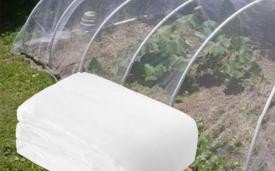
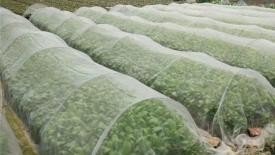
Before asking for a wholesale price, explain where the net will be installed: greenhouse side vents, roof openings, a nursery enclosure or a crop-cover structure. Include the crop, target pest and destination climate. These details help define the opening size and installation requirements instead of relying on a general product name.
Also identify existing fans, cooling pads, access doors and support frames. A screen affects the ventilation system, and an otherwise suitable fabric cannot compensate for gaps around the installation. For greenhouse projects, coordinate the selection with the person responsible for ventilation and crop management.
Extension guidance supports this approach: identify the insects to exclude and consider ventilation before installing screening. Exclusion also depends on controlling entry points. See the UMass Extension herb production guidance for this general principle. A project-specific assessment is still needed.
Five Insect Netting Specifications to Put in Writing
1. Mesh Count, Aperture and Filament Diameter
Request the mesh count in both directions, the measured opening dimensions and the filament diameter. Ask the supplier to state the counting convention and units. Mesh count alone is not a complete description: a change in filament thickness or construction can change the actual openings.
Avoid treating a particular mesh number as a universal guarantee against a named pest. Confirm the selected opening size against the target pest and seek relevant product-specific evidence where exclusion performance is critical. Retain an approved sample as a reference for the bulk shipment.
2. Material, Fabric Weight and Outdoor Exposure
The ZHINONG CLOUD product page lists HDPE insect netting, with other materials available for discussion. Specify the required material and fabric weight in grams per square metre, including agreed tolerances. Colour and construction should also appear on the quotation and sample record.
For outdoor use, describe the local sunlight exposure and expected installation period. Request the UV-stabilisation grade and any relevant test information for the actual product offered. Agree any warranty terms separately; a generic statement such as “UV resistant” does not establish a fixed outdoor service life.
3. Airflow and Light Requirements
Ask for available airflow, porosity or pressure-drop information and the test conditions used. If light transmission matters, request data for the quoted colour and grade. Compare like-for-like measurements rather than combining figures from unrelated products or test methods.
Screening can restrict airflow. Finer openings, material construction and dust accumulation can all affect practical ventilation. Review the installation with the project designer and allow access for inspection and cleaning. Do not select the tightest mesh simply because it appears to offer the most protection.
4. Finished Roll Size and Edge Details
State the finished width and length in metres, the number of rolls and the allowable dimensional tolerances. Identify whether width refers to the opened fabric or its folded packing width. Ask how roll length will be checked and how any joints or splices will be declared.
Discuss edge reinforcement, seams and fastening requirements before calculating quantities. A project take-off should include the actual fixing arrangement and agreed overlap allowances. Distributors should prepare a separate order line for every roll size and grade to keep stock identification clear.
5. Packing, Labels and Receiving Inspection
Agree roll wrapping, core details where applicable, gross weight, package dimensions and handling requirements. For resale, specify the SKU, label language and any barcode information. Link each package to a product grade or batch reference so that receiving teams can reconcile it with the purchase order.
Before placing the order, define what will be checked on arrival and how discrepancies will be reported. Useful checks include roll count, labels, visible damage, dimensions and conformity with the approved sample. Agree the sampling method, acceptance criteria and supporting inspection records in advance.
A Wholesale RFQ Checklist for Comparable Quotes
Send the same specification to each supplier. The lowest price per roll may not represent the lowest price for an equivalent area, grade or delivery scope. If comparing area prices, use the agreed finished dimensions and confirm whether packing and freight are included.
| RFQ item | Information to provide or confirm |
|---|---|
| Buyer and application | Importer, distributor or grower; crop, target pest, installation and country |
| Fabric specification | Material, mesh in both directions, measured aperture, filament diameter, weight and colour |
| Performance evidence | Relevant UV, airflow and light data; test conditions and selected product grade |
| Order quantities | Finished roll width × length, roll count, tolerances and quantities by SKU |
| Sample approval | Reference sample, agreed checks and written acceptance criteria |
| Packing and shipping | Wrapping, labels, package dimensions, destination and agreed delivery terms |
| Commercial details | Currency, price basis, MOQ, lead time, payment terms and quotation validity |
MOQ, production lead time and freight depend on the confirmed specification and order. Request a written quotation rather than assuming that every catalog option is immediately available.
Common Questions From Bulk Buyers
Is a higher mesh count always the better choice?
No. The appropriate insect netting balances the target opening size with the crop’s ventilation requirements and the installation design. Compare measured aperture and filament diameter as well as the mesh label. Ask for help evaluating the selected grade for the actual application.
Can I order different roll sizes in one enquiry?
Send a schedule with each grade, width, length and quantity on its own line. ZHINONG CLOUD can discuss suitable supply options and confirm any minimum quantity or packing constraints in the quotation. Final availability should be agreed before purchase.
What should I check before approving bulk production?
Review the sample, written specification, inspection criteria and packing plan together. Confirm how the shipment will be identified and what documents will accompany it. Keep the approved specification and sample reference available to both the supplier and your receiving team.
Request an Insect Netting Quotation
Prepare your crop, target pest, country, required roll sizes and quantity. Add photographs or drawings of the installation if they help explain the project. We can then discuss product specifications, sample requirements and order details on a clear basis.
ZHINONG CLOUD
Xuzhou Zhinong Cloud Supply Chain Management Co., Ltd.
Xuzhou, China
Email: dongren122@znyglob.com
Phone / WhatsApp: +86 15940818958
Send Your Bulk Purchase Requirements · Explore our insect net range
Planning a wider materials order? Browse our greenhouse solutions and the fiberglass plant stakes wholesale buying guide.